Every American restaurant owner has faced that moment when a negative online review arrives and uncertainty follows. Understanding what these reviews truly mean is crucial, since they are often misunderstood as mere complaints rather than sources of strategic opportunity. Managing feedback professionally not only strengthens trust with future customers but also positions your restaurant for meaningful growth, making reputation management an essential step toward attracting more diners.
Table of Contents
- Negative Reviews Defined And Common Myths
- Types Of Negative Restaurant Feedback Explained
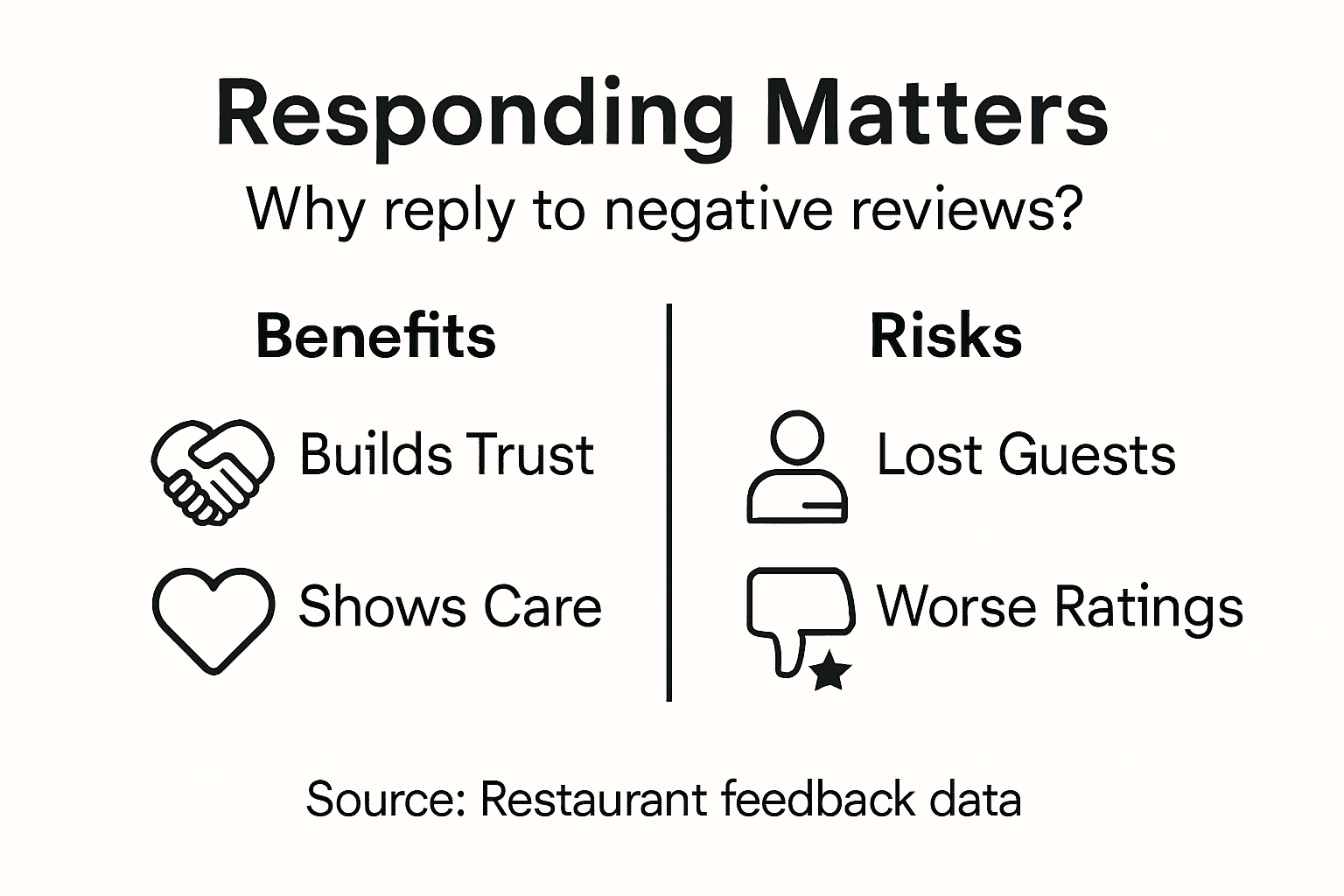
- How Responses Influence Reputation And Revenue
- Best Practices For Responding Professionally
- Risks Of Ignoring And Common Mistakes
Key Takeaways
PointDetailsNegative Reviews as OpportunitiesNegative reviews offer valuable insights into operational weaknesses that can enhance customer satisfaction.Importance of EngagementActively responding to negative feedback can build customer loyalty and trust, transforming criticisms into opportunities for improvement.Psychological Factors MatterSpeed, empathy, and professionalism in responses significantly influence customer perception and can enhance a restaurant's reputation.Risks of Ignoring FeedbackIgnoring negative reviews can lead to severe reputation damage and financial consequences, making timely response essential for success.
Negative Reviews Defined and Common Myths
Restaurant owners often misunderstand the true nature of negative reviews. While many perceive these comments as pure criticism, comprehensive research on customer feedback reveals a more nuanced reality. Negative reviews are not just complaints, but valuable opportunities for strategic improvement and customer engagement.
A negative review typically represents a customer's direct experience with your restaurant that did not meet their expectations. These reviews can encompass various aspects:
- Food quality and taste
- Service speed and friendliness
- Pricing and value perception
- Restaurant atmosphere and cleanliness
- Staff interactions and customer service
Contrary to popular belief, not all negative reviews are harmful. Systematic feedback analysis suggests these reviews provide critical insights into potential operational weaknesses. Customers who take time to write detailed negative reviews often want restaurants to improve, presenting a constructive dialogue opportunity.
Negative reviews are not setbacks, but strategic roadmaps for enhancing restaurant performance.
Some common myths about negative reviews include:
- All negative reviews damage reputation
- Negative feedback should be ignored
- Responding makes the situation worse
- One bad review will destroy business credibility
These misconceptions can prevent restaurant owners from leveraging negative feedback as a powerful improvement tool. Systematic review methodologies emphasize the importance of carefully evaluating customer feedback to identify genuine areas of improvement.
Here's a comparison of myths and realities surrounding negative restaurant reviews:
MythRealityBusiness ImpactAll negative reviews hurt reputationMany reviews offer useful insightsCan highlight areas for improvementFeedback should be ignoredEngaging is vital for trustBuilds customer loyaltyResponding worsens complaintsProfessional responses reduce negativityDemonstrates commitment and transparencyOne bad review destroys credibilityConsistent management mitigates effectsMaintains positive public perception
Pro tip: Transform negative reviews into strategic opportunities by responding professionally, showing genuine concern, and demonstrating a commitment to continuous improvement.
Types of Negative Restaurant Feedback Explained
Comprehensive analysis of restaurant feedback reveals that negative reviews are far more nuanced than simple complaints. These reviews represent critical communication channels where customers share specific experiences that fall short of their expectations, providing restaurateurs with actionable insights into potential operational improvements.
Negative restaurant feedback typically falls into several key categories:
- Food Quality Issues
- Taste and preparation problems
- Temperature inconsistencies
- Portion size discrepancies
- Ingredient freshness concerns
- Service-Related Complaints
- Slow or inattentive staff
- Unprofessional interactions
- Long wait times
- Incorrect order handling
- Ambiance and Environment
- Cleanliness concerns
- Noise levels
- Uncomfortable seating
- Inappropriate restaurant temperature
Understanding these categories helps restaurant owners recognize that negative feedback is not a personal attack, but a valuable diagnostic tool. Industry reports highlight increasing negative review trends that demonstrate customers are becoming more vocal about their dining experiences.
Negative reviews are not obstacles, but roadmaps guiding restaurants toward exceptional customer experiences.
Restaurant owners must recognize that different types of negative feedback require unique response strategies. Some reviews demand technical fixes, while others require addressing emotional customer experiences. Emotional triggers in feedback often reveal deeper operational challenges that extend beyond surface-level complaints.
The most common emotional responses driving negative reviews include:
- Feeling undervalued as a customer
- Experiencing unexpected disappointment
- Perceiving a breach of service expectations
- Encountering perceived disrespect
Pro tip: Systematically categorize negative reviews to identify recurring patterns and develop targeted improvement strategies that address root causes of customer dissatisfaction.
How Responses Influence Reputation and Revenue
Research on restaurant review sentiment reveals a critical connection between review management and business performance. Online reviews are no longer just feedback - they're powerful economic instruments that directly impact a restaurant's financial trajectory and public perception.
The financial implications of review responses are substantial:
- Potential Revenue Impact
- 5-9% revenue increase per star rating
- Higher conversion rates for potential customers
- Enhanced trust and credibility
- Improved search engine visibility
- Reputation Management Benefits
- Demonstrates customer commitment
- Reduces negative sentiment
- Builds brand transparency
- Mitigates potential long-term damage
Harvard Business School research confirms that strategic review responses can translate directly into measurable financial gains. Restaurants that actively engage with customer feedback create a perception of responsiveness and care that goes beyond simple damage control.
Strategic review responses are not just communication - they're a form of customer service and revenue optimization.
Customer sentiment plays a nuanced role in restaurant reputation. Emotional intelligence in responses can transform a potentially negative experience into an opportunity for relationship building. Customers don't just evaluate the initial service; they assess how problems are addressed and resolved.
Key psychological factors influencing customer perception include:
- Speed of response
- Empathy demonstrated
- Concrete solution offered
- Tone of communication
- Follow-through on promises
Pro tip: Develop a systematic approach to review responses that balances professionalism with genuine emotional connection, treating each review as an opportunity to showcase your restaurant's commitment to excellence.